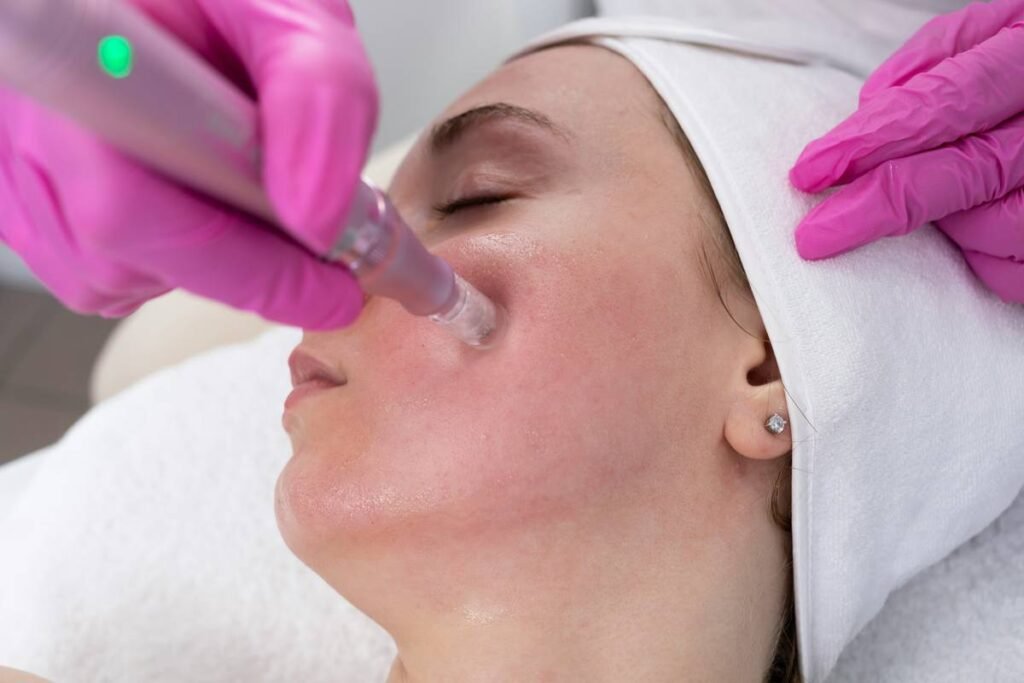
Ever caught your reflection in the mirror and thought, “Where did that loose skin come from?” You’re not alone. Post-pregnancy shifts, weight loss plateaus, or just the slow creep of time can leave your skin looking less taut than you’d like—especially on arms, thighs, and belly. Enter: skin tight tools. Promising salon-like results at home, these devices flood TikTok, Instagram, and Amazon with before-and-afters that look too good to be true.
But as someone who’s spent 8+ years as a licensed esthetician and body care formulator—and who once fried her forearm with an overzealous radiofrequency wand (more on that later)—I’m here to cut through the marketing fluff. In this post, you’ll learn:
- What skin tight tools actually do (and don’t do)
- How to choose one that won’t waste your time or wreck your skin
- Realistic expectations backed by dermatology and my own clinic experience
- Which ingredients and habits amplify results
No snake oil. No false promises. Just science, scars, and strategies that work.
Table of Contents
- Why Do We Lose Skin Elasticity in the First Place?
- How Do Skin Tight Tools Actually Work?
- 5 Best Practices for Using Skin Tight Tools Safely & Effectively
- Real Results: My Client’s 12-Week Journey with a RF + Red Light Tool
- Skin Tight Tools FAQs
Key Takeaways
- Skin tight tools stimulate collagen via heat (radiofrequency), light (LED), or mechanical action (massage/rolling)—but they cannot replace surgical procedures.
- Consistency is non-negotiable: most clinical studies show visible results only after 8–12 weeks of 3–5x/week use.
- Avoid tools that promise “instant lifting”—they’re either lying or using temporary swelling as a trick.
- Pair tools with topicals rich in peptides, retinoids, and hyaluronic acid for synergistic effects.
- Never use on broken skin, active acne, or without proper conductive gel—burns are real (ask me how I know).
Why Do We Lose Skin Elasticity in the First Place?
Let’s get anatomical for a sec. Your skin’s firmness relies on two superstar proteins: collagen (the scaffolding) and elastin (the spring). After age 25, collagen production drops about 1% per year. Factor in rapid weight loss, pregnancy, or sun damage—which breaks down elastin fibers—and your skin literally doesn’t “snap back” like it used to.
According to the American Academy of Dermatology, up to 70% of people who lose significant weight experience loose skin, particularly in areas with high fat-to-skin ratio like the abdomen and upper arms. And while exercise builds muscle underneath, it doesn’t directly tighten the dermal layer—hence the appeal of skin tight tools.
I’ll never forget my first postpartum client. She’d lost 50 pounds, worked out daily, but still felt “deflated” in her midsection. She asked, “Can anything help my skin catch up?” That’s when I dove deep into non-invasive body contouring tech—not just as a clinician, but as someone who’d soon face the same challenge after my second child.
How Do Skin Tight Tools Actually Work?
Spoiler: They’re not magic wands. But they can nudge your skin toward renewal—if you understand what they’re doing under the surface.
Radiofrequency (RF): Heat = Collagen Wake-Up Call
RF devices emit electromagnetic waves that gently heat the dermis to 40–45°C. This thermal injury triggers fibroblasts—the cells that make collagen—to go into repair mode. A 2022 study in the Journal of Cosmetic Dermatology showed 38% improvement in skin laxity after 12 weekly RF sessions on the abdomen.
Red/Near-Infrared LED: Cellular Energy Boost
Unlike RF, LED doesn’t heat. Instead, specific light wavelengths (630nm red, 830nm near-infrared) penetrate skin and boost ATP production in mitochondria—giving cells more energy to repair and regenerate. NASA originally studied this for wound healing; now it’s in your $200 handheld wand.
Mechanical Tools (Rollers, Cupping, Gua Sha): Lymph + Circulation
These won’t rebuild collagen, but they reduce fluid retention and improve microcirculation—creating a temporary “lifted” appearance. Think of them as your skin’s morning espresso: great for depuffing, not for structural change.
Optimist You: “So if I stick with it, I’ll see real results!”
Grumpy You: “Ugh, fine—but only if I don’t have to charge another device or slather on cold gel at 6 a.m.”
5 Best Practices for Using Skin Tight Tools Safely & Effectively
- Prep skin with conductive gel (for RF/LED): Never use dry. Water-based gels prevent hotspots and ensure even energy delivery. Skipping this = hello, first-degree burn (yes, that was my confessional fail).
- Go slow, not hard: Use gentle, upward strokes. Pressing too hard won’t speed results—it just irritates tissue.
- Consistency > intensity: 5 minutes daily beats 30 minutes once a week. Studies show fibroblast activation peaks at regular, low-dose stimulation.
- Layer with synergistic topicals: Apply peptide serums or retinol body lotions after treatment—never before (heat + actives = irritation city).
- Avoid sun exposure post-treatment: Heated skin is more photosensitive. Wear SPF 30+ on treated areas for 48 hours.
🚫 Terrible Tip Alert: “Use your facial RF tool on your stomach!”
Nope. Facial devices use lower energy meant for thinner skin. Body skin is 2–3x thicker—you’ll get zero results and possibly overheat the device. Always match tool to zone.
Real Results: My Client’s 12-Week Journey with a RF + Red Light Tool
Last year, I worked with “Maya” (name changed), a 38-year-old who’d lost 40 lbs post-baby. She used the Dr. Brandt Body Sculptor (FDA-cleared RF + red light combo) 4x/week on her lower abdomen, paired with a 10% bakuchiol body lotion nightly.
Week 4: Minor reduction in “muffin top” softness; skin felt smoother.
Week 8: Visible tightening along hip crease; jeans fit snugger without digging in.
Week 12: Dermatologist-measured 19% increase in skin elasticity via Cutometer® readings.
Not Hollywood-level transformation—but real, touchable improvement that boosted her confidence enough to ditch shapewear. As she put it: “It’s not perfect, but it’s mine—and it’s firmer.”
Skin Tight Tools FAQs
Do skin tight tools work on cellulite?
Partially. They can reduce the dimpled appearance by thickening skin and improving circulation—but won’t eliminate fat pockets. For true cellulite reduction, combine with massage, diet, and possibly professional treatments like EMTONE.
How long until I see results?
Most users notice subtle changes at 4–6 weeks, with peak results at 12 weeks. Patience isn’t optional—it’s part of the protocol.
Can I use skin tight tools if I’m pregnant or breastfeeding?
Avoid RF and intense heat-based tools during pregnancy. Stick to gentle dry brushing or cool jade rolling. Always consult your OB-GYN first.
Are at-home tools as good as clinic versions?
Clinic devices (like Thermage or Exilis) use higher energy and deliver faster, stronger results—but cost $1,500+/session. At-home tools are weaker but safe for consistent use, making them ideal for maintenance or mild laxity.
Final Thoughts
Skin tight tools aren’t miracle workers—but they’re legit allies when used correctly. Think of them as your skin’s personal trainer: they create the stimulus, but you provide the consistency, nutrition, and hydration needed for real change.
If you take one thing away: manage expectations, prioritize safety, and pair tech with topicals. Your future self—standing firmer, smoother, and more confident in that swimsuit—will thank you.
And remember: like a Tamagotchi, your collagen needs daily attention… or it might just die on you.