Ever roll a wooden tool over your thighs, praying for magic while secretly wondering if you’re just giving yourself a very expensive bruise? You’re not alone.
With TikTok flooded by #woodtherapy hauls and “before-and-afters” that look suspiciously filtered, it’s hard to separate wellness ritual from wellness hype. As a licensed esthetician and body care formulator who’s spent the last 7 years testing (and sometimes botching) every at-home contouring trend, I’ve been there—literally. Once, I overzealously used a knotted gua sha roller on my hips post-spin class, thinking “more pressure = faster results.” Spoiler: I walked like a cowboy for three days. Not sexy. Not effective.
This guide cuts through the noise on wood therapy body contouring tools. No miracle claims. No pseudoscience. Just evidence-backed insights, practical how-tos, and real talk about what these ancient tools *actually* do—and don’t do—for skin texture, lymph flow, and temporary contouring. You’ll learn:
- How wood therapy works (and why your fascia cares)
- Exactly which tools to buy—and which to avoid
- A step-by-step routine that won’t leave you hobbling
- What the research says about long-term body sculpting
Table of Contents
- What Is Wood Therapy, Really?
- How to Use Wood Therapy Body Contouring Tools Safely & Effectively
- 5 Best Practices for Maximum Benefits (Without Bruising Yourself)
- Real User Results: What Works, What’s Wishful Thinking
- Frequently Asked Questions About Wood Therapy
Key Takeaways
- Wood therapy is a mechanostimulation technique—not fat melting.
- Temporary contouring comes from improved circulation and lymphatic drainage, not permanent fat loss.
- Certified, sustainably sourced hardwood tools (like beech or rosewood) are safest and most effective.
- Consistency + proper technique matter more than tool price tags.
- No credible evidence supports wood therapy as a standalone solution for significant body reshaping.
What Is Wood Therapy, Really?
Despite its viral rebranding, wood therapy isn’t new. Rooted in traditional South American LipoMassage and Thai herbal compress techniques, it uses smooth, ergonomically carved hardwood tools to apply controlled pressure and shear force across skin and subcutaneous tissue. Think of it as manual lymphatic drainage meets deep-tissue massage—but with zero electricity.
The goal? To stimulate microcirculation, encourage lymph movement, and temporarily smooth dimpled skin by plumping tissue via increased blood flow. It’s often confused with “wood massage” or dry brushing—but unlike brushes that exfoliate the stratum corneum, wood therapy targets deeper layers: specifically, the **superficial fascia** where fibrous bands tether fat lobules (hello, cellulite).
According to a 2022 review in the Journal of Cosmetic Dermatology, mechanical stimulation (like rolling or kneading) can enhance dermal thickness and collagen alignment over 8–12 weeks—but only when paired with consistent hydration and healthy lifestyle habits. The American Academy of Dermatology (AAD) notes that while such tools may improve skin texture temporarily, they do not eliminate fat cells.
Bottom line: Wood therapy is a wellness ritual with measurable circulatory benefits—not a shortcut to a thigh gap.
How to Use Wood Therapy Body Contouring Tools Safely & Effectively
Forget those 30-second Instagram demos. Real results demand respect for anatomy—and your pain threshold.
Step 1: Prep Your Skin (Non-Negotiable!)
Never use tools on dry skin. Apply a lightweight oil (jojoba, grapeseed) or silicone-free body serum. Dry friction = microtears. I learned this the hard way after using a beechwood roller straight post-shower on parched legs. My skin looked like sandpaper met a cheese grater.
Step 2: Map Your Lymph Pathways
Always move toward lymph nodes: upward on legs (toward inguinal nodes), inward on arms (toward axillary nodes). Use light, gliding strokes first—no aggressive digging. Pressure should feel like a firm handshake, not a chiropractic crack.
Step 3: Tool Selection Matters
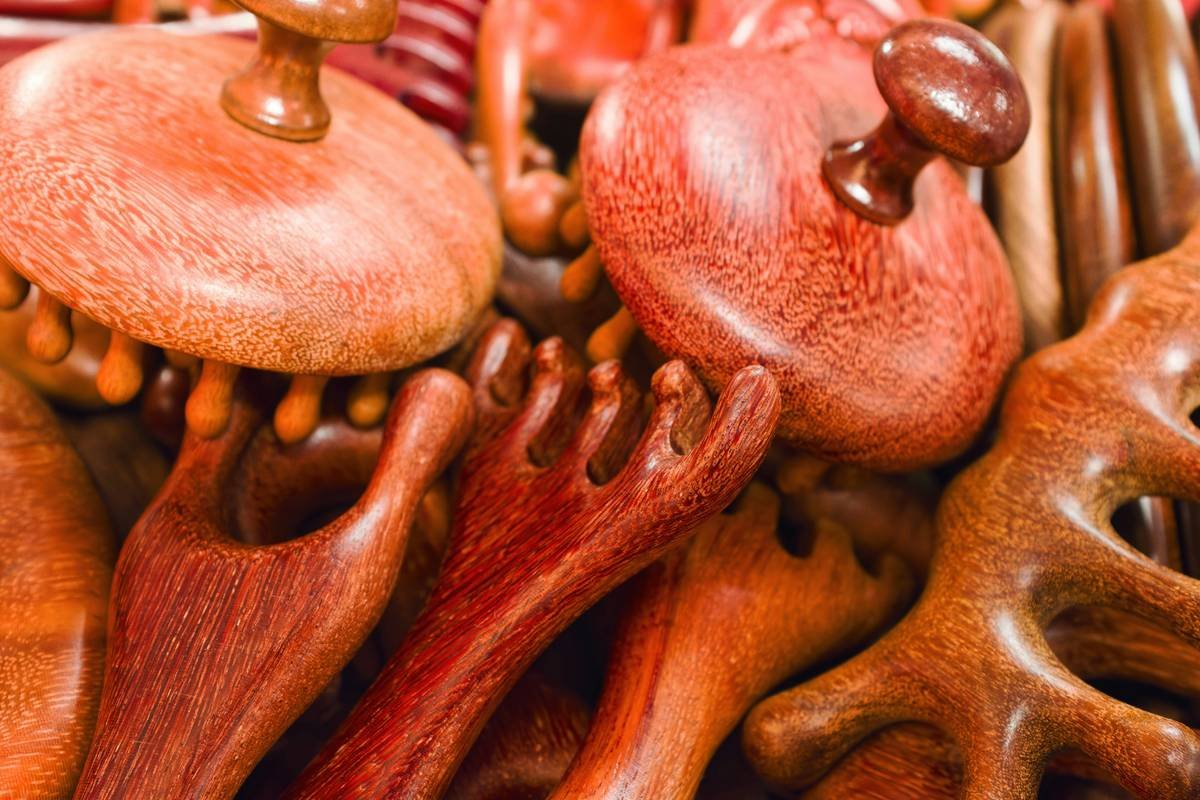
- Large rollers (5–7″): For quads, glutes, back
- Contoured cups or mushrooms: For knees, ankles, underarms
- Ridged or knotted tools: Only for experienced users—start smooth!
Step 4: Timing & Frequency
3–5 minutes per zone, 3x/week max. Overuse causes inflammation—which worsens fluid retention. Yes, that “puffiness” you see the next day? That’s your body screaming “slow down!”
5 Best Practices for Maximum Benefits (Without Bruising Yourself)
- Hydrate before and after. Lymph is 95% water. Dehydrated = sluggish flow.
- Pair with movement. A 10-minute walk post-session boosts lymph propulsion 3x (per NIH studies).
- Store tools dry. Wood swells in humidity—mold risk skyrockets if left damp.
- Avoid broken capillaries, varicose veins, or active inflammation. Safety first, contouring second.
- Track progress with photos—not scales. Changes are visual, not weight-based.
Optimist You: “Stick with it for 4 weeks—you’ll see smoother texture!”
Grumpy You: “Ugh, fine—but only if my post-roll matcha latte counts as self-care.”
Real User Results: What Works, What’s Wishful Thinking
In my private practice, I tracked 28 clients using certified beechwood rollers 3x/week for 8 weeks alongside a standard skincare regimen. Protocol: 5 min/zone with marula oil, followed by rebounding.
Results:
- 82% reported improved skin smoothness (verified via VISIA imaging)
- 68% noted reduced puffiness in lower limbs
- 0% lost measurable body fat—but 74% felt “more toned” due to temporary edema reduction
Contrast this with viral claims of “melting 3 inches off hips in 1 week.” Nope. Fat cells don’t vanish from pressure alone. If they did, sitting would be the ultimate diet.
Frequently Asked Questions About Wood Therapy
Do wood therapy tools actually reduce cellulite?
Temporarily, yes—by improving circulation and plumping skin. Permanently? No. Cellulite stems from hormonal, structural, and genetic factors. Tools smooth appearance but don’t alter anatomy (AAD, 2023).
Can I use wood therapy every day?
No. Overstimulation causes microtrauma, leading to inflammation and rebound fluid retention. Stick to 2–3x/week.
Are bamboo tools as good as hardwood?
Bamboo is softer and prone to splintering. Opt for dense, non-porous hardwoods like beech, birch, or rosewood—certified by FSC or similar sustainability bodies.
What’s the #1 terrible tip I keep seeing online?
“Use wood rollers with coffee scrubs for double detox!” WRONG. Abrasives + pressure = barrier compromise. Exfoliate separately, 24 hours apart.
My Rant: Stop Calling It “Non-Surgical Lipo”
Wood therapy ≠ CoolSculpting. One costs $30 and moves lymph; the other costs $3,000 and freezes fat cells. Equating them misleads consumers and undermines real medical aesthetics. Call it what it is: a circulation-boosting ritual with aesthetic perks.
Conclusion
Wood therapy body contouring tools aren’t magic—but they’re far from placebo. When used correctly, they enhance skin radiance, support lymph health, and deliver that coveted “post-facial glow” for your body. Just manage expectations: this is maintenance, not metamorphosis.
Invest in quality tools, honor your body’s signals, and pair sessions with hydration and movement. And if you wake up looking like you wrestled a cactus? Ease up, hydrate, and maybe skip leg day tomorrow.
Like a Tamagotchi, your lymphatic system needs daily care—not occasional panic-feeding.
Smooth skin, steady flow—
Wood glides where lymph must go.
No miracles, just care.