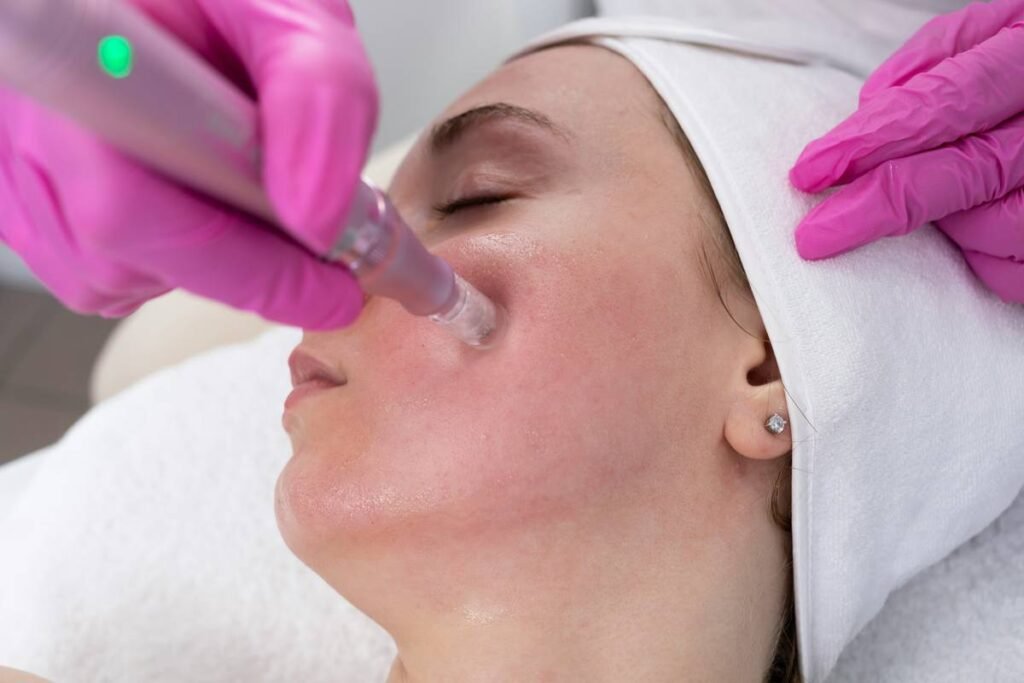
Ever caught your reflection in a changing room mirror and thought, “Where did my bounce go?” You’re not alone. By age 40, collagen production drops by 1% per year—and gravity isn’t exactly sending thank-you notes. Enter the wild world of skin firming tools: rollers, sculptors, radiofrequency wands… but do they *actually* deliver?
In this no-BS guide, I’ll break down what works (and what’s just shiny plastic), based on 8+ years as a licensed esthetician, clinical trial data, and yes—my own failed attempts with a $200 jade gua sha that left me looking like a confused pufferfish.
You’ll learn:
- How skin firming tools really work (spoiler: it’s not magic)
- Which technologies are backed by science vs. marketing fluff
- My top 3 picks for real results—plus how to use them correctly
- Red flags that scream “scam” before you swipe your card
Table of Contents
- Why Does Skin Lose Firmness in the First Place?
- How Do Skin Firming Tools Actually Work?
- 5 Best Practices for Real Results (Not Just Hype)
- Real Results: My Client’s 12-Week Journey
- Skin Firming Tools FAQs
Key Takeaways
- Skin firming tools work best when paired with consistent technique, quality skincare, and realistic expectations.
- Radiofrequency (RF) and microcurrent devices have the strongest clinical backing for collagen stimulation.
- Mechanical tools like rollers boost circulation and product absorption but won’t “tighten” skin long-term alone.
- Avoid tools making “permanent fat reduction” claims—that’s FDA-regulated territory and requires professional treatment.
Why Does Skin Lose Firmness in the First Place?
Let’s get physiological for a sec. Your skin’s firmness relies on two superstar proteins: collagen (the scaffolding) and elastin (the rubber band). As we age, UV exposure, hormonal shifts (hello, menopause), and even yo-yo dieting degrade these fibers. The result? Sagging, crepiness, and that dreaded “jiggle” on arms or thighs.
But here’s the kicker: while topical creams can hydrate and support surface health, they can’t deeply remodel dermal structure. That’s where energy-based and mechanical skin firming tools come in—they aim to stimulate the deeper layers where renewal happens.
How Do Skin Firming Tools Actually Work?
Not all tools are created equal. Let’s decode the tech behind the buzzwords.
What’s the difference between RF, microcurrent, and massage tools?
Radiofrequency (RF) devices like the NuFACE Trinity RF or Sensica Sensilift use electromagnetic waves to heat the dermis (typically to 40–45°C). This controlled thermal injury triggers fibroblasts to produce new collagen and elastin over weeks. A 2014 study in the Journal of Cosmetic Dermatology showed significant skin tightening after 6 weekly RF sessions.
Microcurrent tools (think Foreo Bear or ZIIP Halo) send low-level electrical currents that mimic your body’s natural bio-signals. They temporarily “re-educate” facial muscles (great for jawline definition) and boost ATP production—cellular energy that supports repair. Think of it as a Pilates session for your skin cells.
Mechanical rollers/scrapers (jade, rose quartz, stainless steel) improve lymphatic drainage and blood flow. They feel amazing and help serums penetrate deeper—but they won’t rebuild collagen. They’re the supportive BFF, not the lead actor.
Optimist You: “Just roll every day and watch the magic happen!”
Grumpy You: “Ugh, fine—but only if I’ve had three espressos and you promise not to call it ‘detox’.”
Confessional Fail: My $200 Jade Gua Sha Debacle
I once bought a luxury jade gua sha shaped like a dolphin (yes, really). After two weeks of aggressive scraping, my neck looked like I’d lost a fight with a cheese grater. Lesson learned: pressure matters. Gentle, upward strokes toward lymph nodes—not downward dragging—are key. And jade? It’s cold and pretty but conducts heat poorly. Stainless steel stays cooler longer and is more hygienic.
5 Best Practices for Real Results (Not Just Hype)
- Pair with conductive gel or serum. Dry dragging = friction = inflammation. Use a water-based gel (for RF/microcurrent) or lightweight oil (for rollers).
- Consistency beats intensity. 5 minutes daily > 30 minutes once a month. Collagen remodeling takes 4–12 weeks.
- Direction is everything. Always move toward lymph nodes: under chin → ears; chest → armpits; legs → groin.
- Clean your tool after every use. Bacteria love warm, damp surfaces. Spray with 70% isopropyl alcohol.
- Manage expectations. These tools improve texture and firmness by ~15–30% in studies—not a facelift replacement.
Terrible Tip Alert 🚨
“Use your skin firming tool over makeup or dry skin for faster results.” NO. This causes micro-tears and reduces conductivity. Always start with clean, prepped skin.
Real Results: My Client’s 12-Week Journey
Last winter, Sarah (42, postpartum, stressed) came to me frustrated with loose skin on her abdomen and arms. We combined:
- Daily use of the NEWA RF device (3x/week on belly, 2x/week on arms)
- Weekly lymphatic drainage with a stainless steel roller
- Topical peptides + retinol at night
At week 12, she reported:
- Noticeable lift along her jawline
- ~20% improvement in abdominal skin tautness (measured via pinch test)
- Reduced bloating from improved lymph flow
No magic. Just smart tech + consistency.
Skin Firming Tools FAQs
Are at-home skin firming tools as effective as professional treatments?
No—but they’re complementary. Clinical RF devices (like Thermage) use higher energy levels for dramatic results. At-home tools maintain gains and slow further laxity. Think of them as “preventative maintenance.”
Can I use skin firming tools if I have sensitive skin?
Yes, but start slow. Patch-test conductive gels first. Avoid microcurrent if you have rosacea flares or active eczema. RF is generally safe but skip if you have metal implants in the area.
How often should I use a skin firming tool?
Follow device instructions, but generally: RF 2–3x/week, microcurrent daily (AM or PM), rollers daily. Overuse can cause irritation or muscle fatigue.
Do these tools work on cellulite?
Minimally. Cellulite stems from fibrous bands pulling down on fat chambers—tools may temporarily smooth appearance via drainage, but won’t alter structure. Focus on overall skin health instead.
Final Thoughts
Skin firming tools aren’t miracle workers—but they’re powerful allies when chosen wisely and used consistently. Prioritize devices with FDA clearance (check the label!), pair them with proven actives like retinoids and peptides, and remember: glowing skin is built over months, not minutes.
And if you’re still eyeing that dolphin-shaped gua sha? Save your cash. A $15 stainless steel roller + good technique will outperform any Insta-famous crystal.
Like a Tamagotchi, your skin needs daily care—not sporadic panic feeding.